 Available in US
Towcester Greyhound Racing: Home of the Derby and Track Guide Towcester: Where the Derby Lives Towcester became the most important track in British greyhound ra
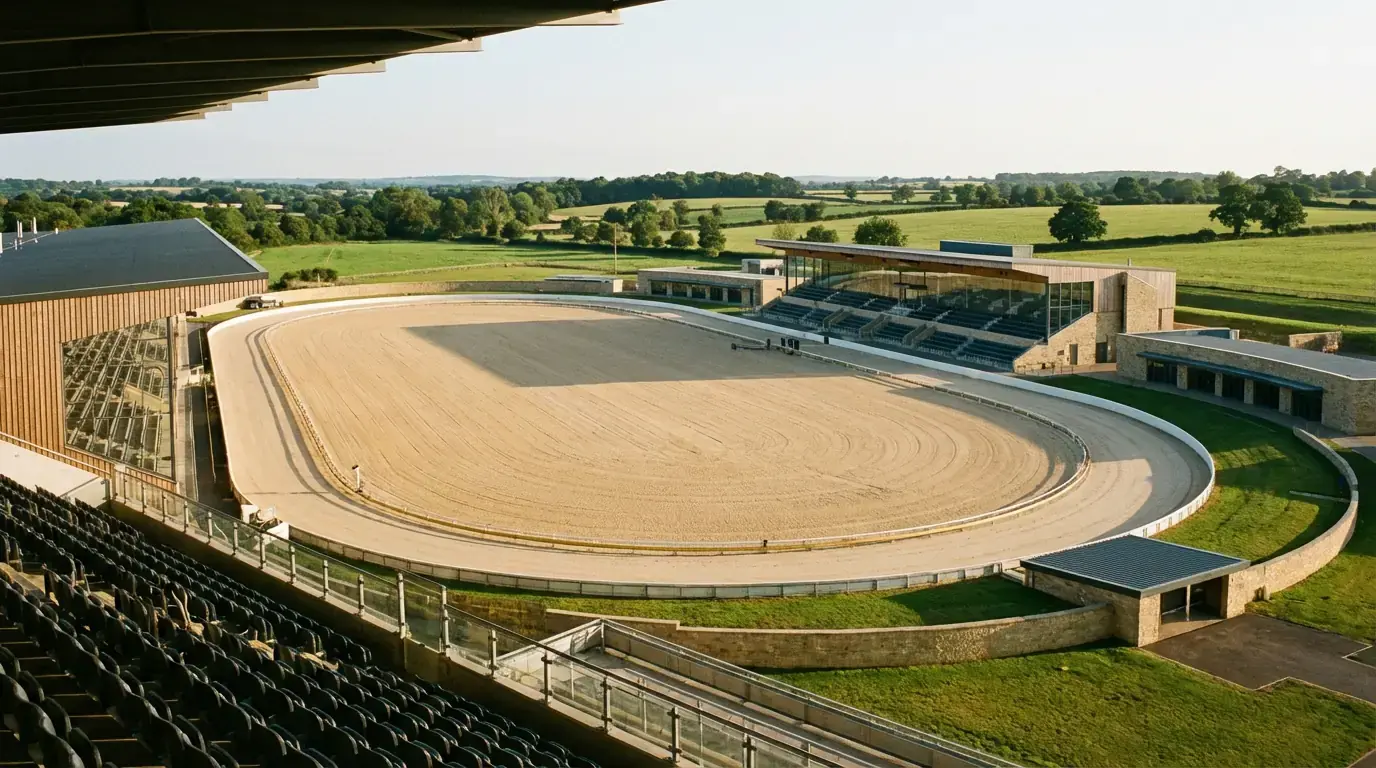
Towcester: Where the Derby Lives
Towcester became the most important track in British greyhound racing almost by default. When Wimbledon closed its doors, the English Greyhound Derby needed a new home, and the Northamptonshire venue stepped into the role. What it lacks in urban footfall it makes up for in facilities, a spacious track layout and an association with the sport’s premier event that gives it a stature no other current venue can claim.
For punters, Towcester presents a different proposition from the bread-and-butter BAGS tracks. The circuit is larger, the distances longer, and the racing characteristics demand a different analytical approach. Dogs that excel at tight sprint tracks may struggle with Towcester’s sweeping bends and extended trips. Conversely, stayers and dogs with tactical speed find Towcester’s layout suited to their strengths. Understanding these differences is the key to betting profitably when the card moves to this part of the Midlands.
This guide covers the Towcester track in detail: its layout, its distances, the trap bias data, and how to approach betting on a venue that is unlike any other on the UK circuit.
Track Profile and Layout
Towcester operates on one of the larger circuits in UK greyhound racing. The oval is spacious, with wide bends and long straights that give the racing a different rhythm from the compressed, bend-heavy action at smaller venues. Dogs have more room to manoeuvre, the pack spreads out earlier, and positional battles through the bends are less intense because there is more space to negotiate.
The racing surface is sand throughout, maintained to accommodate the demands of both standard fixtures and the marquee events the venue hosts. The larger footprint means more surface area to manage, and the racing manager works to ensure consistent going across the entire circuit. Drainage is adequate for the rural Northamptonshire setting, though the track can be affected by prolonged wet weather in a way that more urban venues with superior infrastructure sometimes avoid.
The run to the first bend is longer than at most other UK tracks, which significantly alters the dynamics of the start. Dogs drawn wide have more time to angle towards the rail or establish their running line before the field compresses into the turn. This reduces the penalty for a wide draw and makes trap bias less pronounced than at tighter venues. The racing is consequently more open, with results less predictable from the draw alone.
The home straight is long enough to produce genuine finishes where dogs change places on the run to the line. Late closers with strong finishing speed can pick up positions that would be impossible at a shorter-straight track. This characteristic makes form reading at Towcester slightly different from the norm: you need to consider not just a dog’s early pace but its ability to finish strongly through the final straight.
Distances and Race Types
Towcester’s track dimensions allow it to stage races over a wider range of distances than most UK venues. The standard distance is around 480 metres, which is the benchmark trip for graded racing. Sprint distances of approximately 270 metres test early speed over a shorter course, while the track accommodates stayers’ races at 660 metres and marathon events at 840 metres and beyond.
The marathon distances are Towcester’s unique selling point. No other GBGB-licensed track regularly stages racing over 840 metres, making Towcester the home of distance racing in the UK. Marathon events attract a niche pool of stayers that are bred and trained specifically for the demands of extended trips. The form base at these distances is narrow, which creates both challenges and opportunities for the bettor: less data to work with, but also less accurate pricing from bookmakers who have fewer reference points.
The English Greyhound Derby is run over the standard distance, which means the track’s biggest event tests the full range of greyhound abilities rather than favouring a specific type. The Derby requires early pace to negotiate the bends safely, stamina to sustain through two laps, and the tactical intelligence to avoid trouble in a field of elite competitors. The standard distance at Towcester is a fair test, and the results of the Derby generally reflect genuine quality rather than track-specific quirks.
Graded racing follows the standard GBGB structure, with dogs graded by performance at the track. Open races and feature events are staged on the bigger meeting nights and attract the strongest fields. The mid-grade cards, particularly on BAGS fixtures, provide steady racing with form that is reliable enough for systematic analysis.
Towcester Trap Bias Analysis
Trap bias at Towcester is among the mildest on the UK circuit. The larger track dimensions and longer run to the first bend dilute the inside-trap advantage that is so pronounced at tighter venues. All six traps produce win rates that sit relatively close to the expected average, making this one of the fairest tracks for dogs drawn in the outside boxes.
At sprint distances, a slight inside bias persists. Trap 1 performs modestly above average because the rail still provides a natural line through the first bend, even on a wider circuit. But the magnitude of the advantage is small, and a quality dog drawn in Trap 5 or 6 can overcome it with clean breaking and sound bend running.
At the standard 480-metre distance and beyond, the bias is negligible in aggregate. Individual race results can produce streaks that suggest a bias, but over a meaningful sample the traps perform with rough equality. This is good news for form analysts because it means the draw is less likely to override the form book. The better dog has a better chance of winning regardless of trap, which makes form reading more productive and less dependent on positional lottery.
Marathon distances introduce their own dynamics. Over 840 metres, the field negotiates six or more bends, and the cumulative effect of running wide through each turn becomes significant even on a spacious track. Dogs that can rail efficiently gain a measurable advantage over those that race wide, but this is more a function of running style than starting trap. A wide runner that settles on the rail after the first bend can race as efficiently as an inside-drawn railer.
Betting at Towcester
Towcester’s betting markets are at their deepest during feature meetings and the Derby period. The regular BAGS cards attract reasonable bookmaker coverage, but the marquee events draw the widest range of prices and the most competitive margins. For punters, the implication is straightforward: the best value from odds comparison arrives on the bigger nights.
The reduced trap bias at Towcester shifts the analytical focus towards form and class rather than draw and early speed. This rewards the punter who studies race cards carefully and assesses each dog’s ability over the specific distance. A dog stepping up from 480 metres to 660 metres for the first time is a different betting proposition from one with proven staying form, and the market does not always price that distinction accurately.
Ante-post betting around the Derby is a significant feature of the Towcester calendar. Bookmakers offer odds on Derby contenders weeks or months before the event, and the ante-post markets attract considerable interest from both casual and serious punters. The value in ante-post Derby betting lies in identifying dogs early in the competition that the market underestimates, but the risk is real: ante-post bets are lost if the dog does not make the final.
Each way betting at Towcester is more productive than at tighter tracks because the reduced trap bias and longer straights produce more open finishes. Dogs finishing second at Towcester are more likely to have run a genuine race and found the first dog too good, rather than being eliminated by a poor draw. This makes the place part of an each way bet a more accurate reflection of the dog’s ability, and it improves the value proposition for each way punters at the right prices.
Meeting Schedule
Towcester hosts regular meetings throughout the racing calendar, with the schedule built around BAGS fixtures supplemented by evening meetings and feature events. The track is busiest during the spring and summer months when the Derby season draws national attention to the venue.
Outside the Derby period, Towcester operates as a solid working track with a loyal following among Midlands greyhound punters. The BAGS meetings provide steady racing, and the regular evening fixtures offer stronger fields and deeper markets. The marathon events, staged periodically throughout the year, are unique to Towcester and attract a specialist following of punters who enjoy the tactical demands of distance racing.
The Stage for Greatness
Towcester occupies a singular position in UK greyhound racing. It is the home of the sport’s greatest event, the custodian of marathon racing, and a track whose generous dimensions produce fairer, more open competition than the circuit average. For punters, it demands a different approach from the tight-track sprint specialists, but it rewards that adjustment with racing that is more form-dependent and less draw-dependent than anywhere else on the calendar. The track shapes the race. At Towcester, the race belongs to the best dog more often than not.
Find more track guides at greyhoundoddschecker.
Also explore our UK greyhound tracks guide.
