
 Available in US
Greyhound St Leger Betting: Staying Classic Odds and Tips The Greyhound St Leger The Greyhound St Leger is the staying championship of British dog racing. Where
The Greyhound St Leger
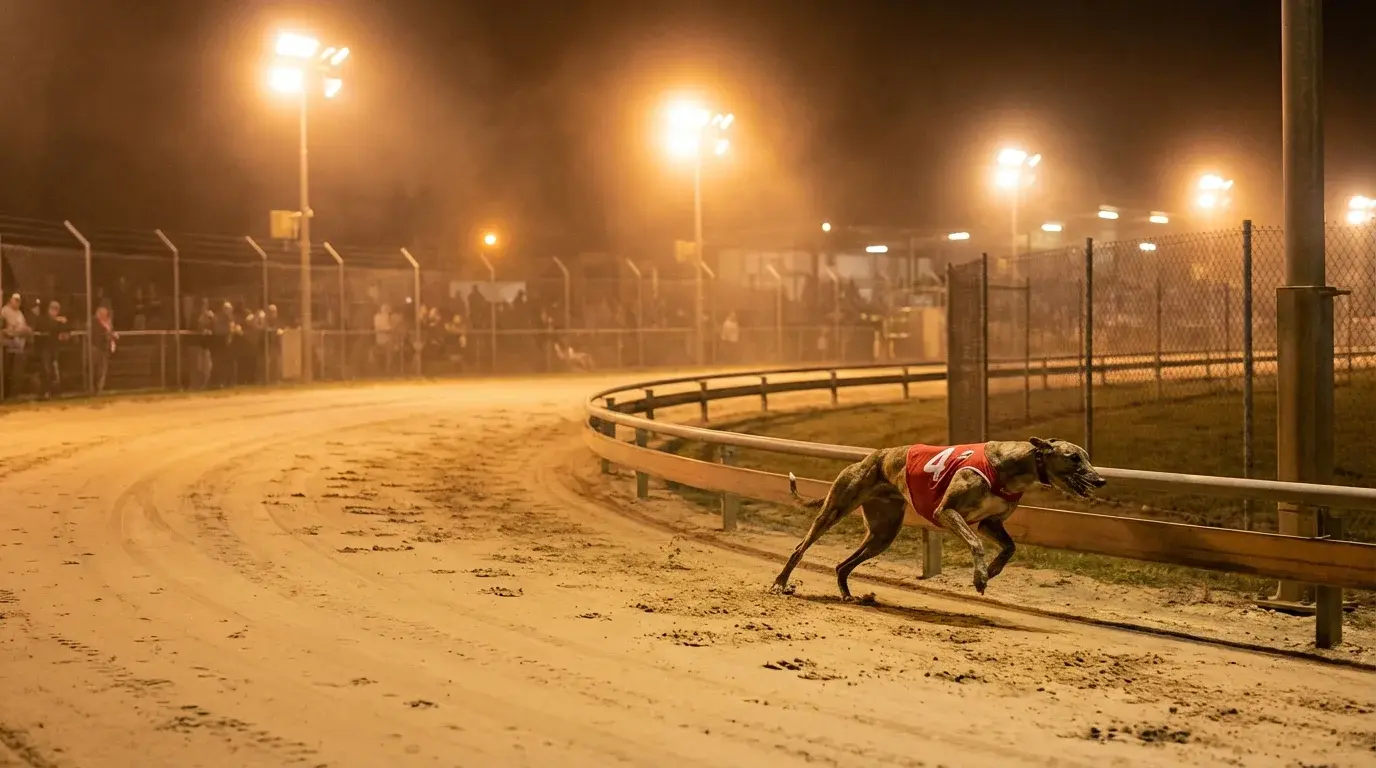
The Greyhound St Leger is the staying championship of British dog racing. Where the Derby tests all-round speed over a standard distance, the St Leger asks a different question: which greyhound can sustain its pace over a longer trip, handle extra bends and outlast rivals that would be formidable over shorter courses? It is the marathon to the Derby’s mile, and it occupies a unique place in the greyhound calendar.
For punters, the St Leger offers a different set of analytical challenges. Staying form is harder to assess than sprint or middle-distance form because fewer races are run at extended trips, the form base is narrower, and the physical demands of distance racing introduce variables that do not exist over standard courses. Dogs that appear dominant over 480 metres may struggle to sustain that dominance over 660 metres or beyond. The St Leger exposes those limitations, and the betting market does not always price them accurately.
This guide covers the St Leger’s history, the competition format, the ante-post betting landscape, and the strategic considerations that apply specifically to distance greyhound racing.
St Leger History and Tradition
The Greyhound St Leger has been a fixture of the British racing calendar since 1928, one year after the English Greyhound Derby was first staged. The two events quickly established themselves as the twin pillars of the sport’s major competition calendar: the Derby for the fastest dogs and the St Leger for the best stayers. Together, they form the core of what serious greyhound followers consider the championship events.
The race has been hosted at various venues over its history, reflecting the broader pattern of stadium closures and relocations that has reshaped the UK circuit. The St Leger’s distance has varied too, depending on the host track’s configuration, but it has consistently been run over a trip that demands genuine stamina and the ability to maintain racing speed through multiple bends.
The St Leger attracts a different type of contender from the Derby. While some exceptional dogs have competed in both events, the staying specialists that target the St Leger are typically bred and trained with endurance as a priority. Their running style tends to be more measured, with a controlled early pace followed by a sustained run through the second half of the race. This contrast with the explosive early speed valued in Derby contenders gives the St Leger its own character and its own form puzzle.
Prize money for the St Leger has grown over the decades, though it remains below the level of the Derby. The prestige of the event, however, is immense within the greyhound community. Trainers who produce a top-class stayer take particular pride in the achievement, because distance racing demands a different set of training skills and a deeper understanding of canine physiology than sprint preparation.
Competition Format
The St Leger follows a similar knockout structure to the Derby, with heats leading through quarter-finals and semi-finals to a final. The number of rounds depends on the size of the entry, and the competition typically spans two to three weeks from the first heat to the concluding race.
The extended distance changes the dynamics of each heat in meaningful ways. Over a longer trip, the cumulative effect of the draw is amplified because dogs negotiate more bends. A wide runner covering extra ground on every turn faces a significant stamina penalty over the course of the race. Conversely, an efficient railer that hugs the inside line through five or six bends gains a compounding advantage that barely exists over two-bend sprints.
Qualifying positions follow the standard format: a set number of dogs from each heat advance to the next round. The knockout element means that a single poor run eliminates a contender regardless of its overall ability. This is even more relevant in staying races because the extended distance increases the chance of interference, trouble in running and fatigue-related mistakes. A top stayer that gets crowded at the third bend and loses momentum may not have enough race left to recover, even though the same dog over a shorter trip would easily make up the ground.
The trap draw for each round is crucial and requires close monitoring. Because the distance amplifies the importance of clean running lines, the draw can be the difference between a comfortable qualification and a scrappy survival. Punters who track the draw from heat stage through to the final have a significant informational advantage over those who only engage with the event on final night.
Ante-Post St Leger Betting
Ante-post betting on the St Leger operates under the same rules as the Derby: your selection must compete in the race, or the bet is lost. The risk of non-participation is arguably higher in the St Leger because staying dogs are more susceptible to the physical toll of extended racing. Muscular injuries and fatigue-related issues are more common at marathon distances, and a dog that sails through the early rounds may pick up a problem that prevents it from running in the final.
The ante-post market for the St Leger is typically thinner than the Derby equivalent. Fewer bookmakers price it up as early, and the range of prices can be narrower. This is a function of the event’s lower profile among casual punters and the smaller pool of realistic contenders. For the punter who follows staying form closely, this thinner market can actually be an advantage: less scrutiny means more opportunity for the odds to lag behind the form.
Identifying potential St Leger contenders requires specific knowledge. Look for dogs with proven staying form over at least 660 metres, a clean racing style that minimises ground lost through bends, and a trainer with a track record of preparing stayers for major competition. Dogs stepping up to a staying trip for the first time are risky ante-post propositions because the jump in distance is a significant unknown. Those with established distance form provide a firmer foundation for ante-post investment.
The timing of ante-post bets on the St Leger follows the same logic as the Derby but with an additional layer of caution. The smaller field of genuine contenders means that a single withdrawal can significantly reshape the competition, and early prices may not adequately reflect the fragility of the staying game. A selective approach, backing one or two dogs at the right price rather than spreading across the market, tends to produce better results.
Notable Previous Winners
The St Leger roll of honour features dogs whose names may be less familiar to casual punters than the Derby champions but are revered among staying specialists. The race has produced greyhounds of extraordinary stamina, dogs capable of sustaining racing speed over distances that would expose lesser animals.
Historical winners often came from breeding lines specifically developed for distance racing. Irish breeders have been particularly influential in producing stayers, and Irish-trained dogs have an excellent record in the English St Leger. The cross-Channel form angle applies here just as it does in the Derby, with the added complication that Irish staying racing runs over different distances and on different track configurations.
Studying previous St Leger finals reveals a consistent pattern: the draw matters enormously, early pace is important but not as dominant as in the Derby, and dogs that race efficiently through the bends tend to prevail over those with raw speed but wasteful running styles. Favourites have a mixed record, which reflects the difficulty of predicting outcomes over extended distances where stamina can fail at any point in the race.
St Leger Betting Strategy
The first strategic principle for St Leger betting is to prioritise proven stamina over extrapolated form. A dog that has won impressively over 480 metres is not automatically a St Leger contender. The additional distance demands qualities that do not show in shorter-trip form figures: the ability to maintain a racing tempo through extra bends, the physical durability to sustain effort, and the mental resilience to keep competing when fatigue sets in. Only dogs with actual staying form, demonstrated in races over 630 metres or longer, should be considered serious contenders.
Trap draw analysis becomes even more important over the St Leger distance. Calculate the cumulative positional advantage of inside versus outside runners over five or six bends, and the inside-drawn railer gains metres of advantage that translate directly into reduced effort. Factor the draw into your assessment of each round, and be prepared to adjust your view of a dog’s chance based on which box it pulls.
Each way betting is particularly well suited to the St Leger because the outcome uncertainty is higher than in standard races. The extended distance introduces more variables, more potential for trouble in running, and more opportunity for an outsider to capitalise on a front-runner’s fatigue. Place terms on a six-dog final at staying distances offer genuine protection against the unpredictability that distance racing inherently produces.
Watch the competition closely from the first round. How a dog handles the early heats, specifically whether it wins with authority or scrapes through under pressure, is revealing. A stayer that wins its heat with plenty in reserve is demonstrating both the ability and the fitness to handle the demands of a knockout competition over an extended trip. A dog that is all out to qualify may not have enough left in the tank for the final rounds.
The Staying Test
The St Leger stands apart from every other event on the greyhound calendar because it tests qualities that standard racing barely touches. Stamina, efficiency, durability and the ability to race hard over a distance that punishes inefficiency at every bend. For punters, it demands a specialised form of analysis that goes beyond the standard toolkit. But those who invest the effort to understand distance form, draw dynamics and the physical demands of staying racing find that the St Leger rewards careful study with betting opportunities that the wider market overlooks.
Find more race guides at greyhoundoddschecker.
Also read our English greyhound derby betting.
