 Available in US
Greyhound Grading System Explained: A1 to A10 and Open Races How Greyhound Grading Shapes Every Race Every greyhound running at a licensed UK track is assigned
How Greyhound Grading Shapes Every Race
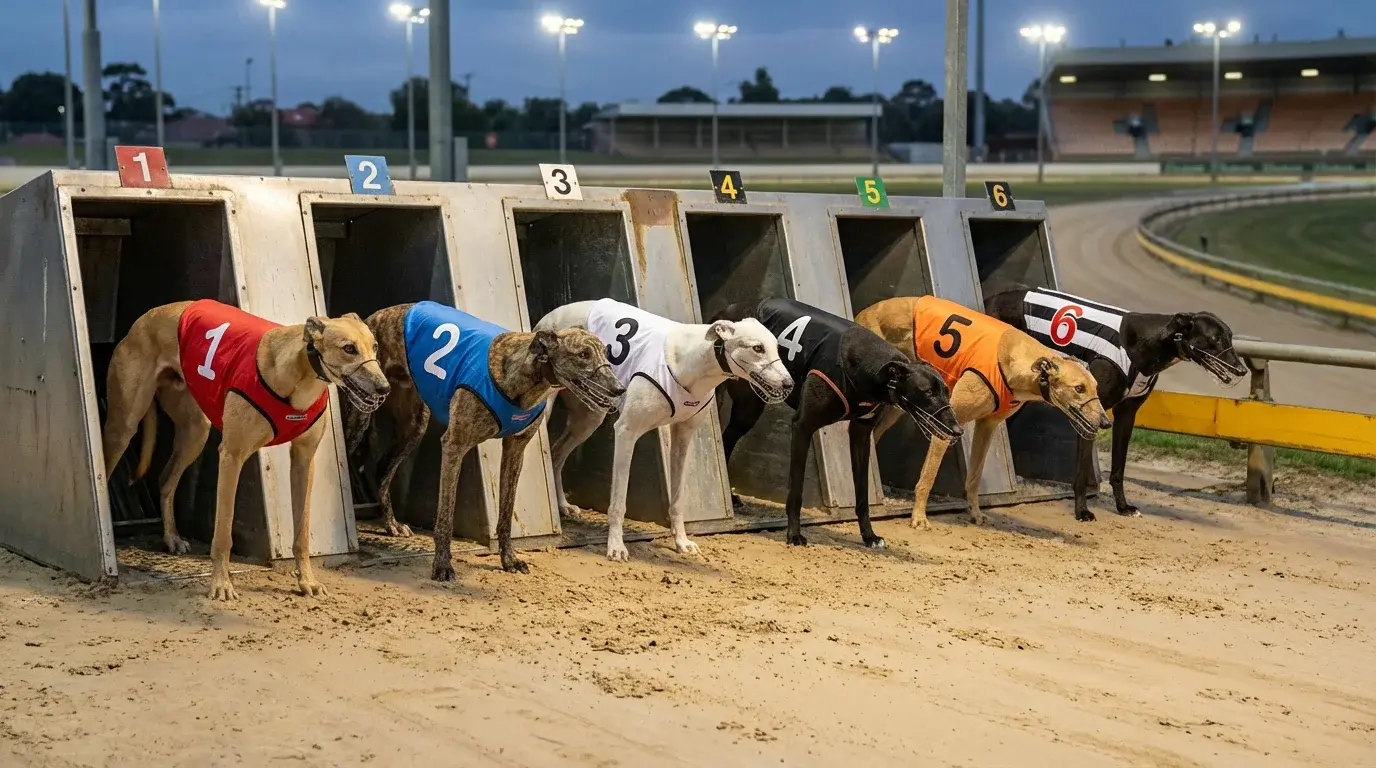
Every greyhound running at a licensed UK track is assigned a grade. That grade determines which races the dog enters, which dogs it competes against, and ultimately the level of competition a punter is analysing when studying the race card. Understanding the grading system is not optional background knowledge. It is a core analytical skill, because a dog’s grade tells you where it sits in the ability ladder and how it arrived there.
Grading exists to produce competitive racing. By grouping dogs of similar ability, the system ensures that fields are evenly matched and results are harder to predict from raw class alone. A well-graded race should feature six dogs with realistic winning chances, which is precisely what bookmakers want and what makes greyhound betting interesting. The challenge for the punter is reading between the grades: spotting dogs that are improving into a higher level, dogs that are slipping, and dogs whose grade flatters or deceives.
This guide explains how the grading system works across UK tracks, what each grade level means, how promotion and relegation function, and how to use grading information as a betting tool.
How the Grading System Works
Grading at UK greyhound tracks is managed by the racing manager at each individual stadium. There is no single national grading system. Each track operates its own grading structure based on the standard of dogs racing there. This means that an A3 at Romford is not necessarily the same standard as an A3 at Monmore or Towcester. The grades are relative to the track’s own population of runners.
The racing manager assigns grades based on recent race performance, primarily finishing times and finishing positions. A dog that wins a race or runs significantly faster than expected may be promoted to a higher grade. A dog that finishes consistently out of the places may be demoted. The system is dynamic, with grades reviewed regularly after each race or series of races.
The letter prefix indicates the race type. “A” grades cover standard flat racing over the track’s primary distances. “D” grades are used at some tracks for different distance categories. “OR” or “Open” denotes open races where dogs compete regardless of grade. The numerical suffix indicates the level within the grade category, with lower numbers representing higher ability. A1 is the top graded level, populated by the best dogs at that track below open-race class.
New arrivals at a track are typically assigned an initial grade based on their form at previous venues, their trial times and the racing manager’s assessment. This initial grading is necessarily imprecise, and dogs can move rapidly up or down once they begin racing at their new home. First-time runners at a track deserve particular attention from punters because they may be under-graded or over-graded relative to the competition they face.
Grade Levels and What They Mean
At a major track like Romford or Monmore, the grading structure might run from A1 at the top down to A8, A9 or even A10 at the bottom. A1 dogs are the best graded runners at the stadium, one step below open-race class. These are typically fast, experienced dogs with strong recent form and competitive race times. The fields in A1 races are strong, and the prices tend to be tighter because the market recognises the quality.
Mid-grade races from A3 to A6 are where the bulk of everyday racing takes place. These grades produce the deepest form libraries because more dogs race at these levels and the fields are frequently reshuffled as dogs move up and down through the system. For the betting punter, mid-grade races are often the most fertile ground. The form is plentiful, the competitive balance is genuine, and the market is less efficient than in the top grades where the ability gaps are smaller and the dogs are better known.
Lower grades from A7 downward feature dogs of lesser ability or dogs returning from injury or absence. The form in these grades can be less reliable because the dogs are more inconsistent. Unexpected results are more common, which means larger-priced winners and more volatile markets. Some punters actively target lower-grade races for this reason, seeking value in fields where the bookmaker’s pricing is less precise.
Open races sit above the graded structure entirely. These events pit the best dogs at the track against each other without regard to grade, and the fields attract entries from the highest level of competition available. Open races are often the feature events on evening cards, and they generate the deepest betting markets. The standard is high, the margins between runners are slim, and the form reading is correspondingly demanding.
Promotion and Relegation
The grading system is fluid. Dogs move between grades based on their recent performances, and the movement can happen quickly. A dog that wins two races in succession at A5 will almost certainly be promoted to A4 or higher. A dog that finishes last in three consecutive A3 races may be dropped to A4. The racing manager makes these decisions, and while the criteria are not published as rigid formulas, the general principles are consistent across tracks.
Winning is the most common trigger for promotion. A winner at any grade is likely to be raised at least one level, and an impressive winner that posts a fast time may jump two grades. This creates a natural mechanism where improving dogs rise through the system until they reach a level where they are competitive but no longer dominant.
Demotion typically follows a run of poor results, but the racing manager exercises judgement. A dog that finishes fourth in an A2 race after encountering interference will not necessarily be demoted, because the result does not reflect its true ability. A dog that finishes last in A4 for three races in a row on clear runs will almost certainly drop. The subjective element in grading decisions means that some dogs end up slightly misplaced, racing at a grade that is marginally above or below their true level. These misplacements are where the value lies for the punter who reads form carefully.
Transfer between tracks resets a dog’s grading position. A dog graded A2 at Monmore does not automatically slot into A2 at Romford. The racing manager at the new track assesses the dog’s form, runs a trial, and assigns a grade based on how the dog performs on their surface and at their distances. Dogs that transfer frequently or have raced at multiple tracks can carry form information from venues with very different characteristics, and that information needs to be interpreted with care.
How Grading Affects Betting
The most direct impact of grading on betting is that it defines the competitive context for every race. Knowing a dog’s grade tells you the approximate standard of opposition it faces, and this context is essential for evaluating form. A dog that has won three of its last five at A6 is a different prospect from a dog that has won three of its last five at A2. The raw form figures look identical, but the quality of competition is vastly different.
Grade changes are a critical signal. A dog being promoted after a sequence of wins faces stronger opposition at its new level. The market often adjusts the price accordingly, but not always accurately. Sometimes the market overreacts to a promotion, sending the dog off at longer odds than its ability warrants because punters assume it will struggle at the higher grade. Other times the market is too slow to react, and the promoted dog goes off at the same sort of price it enjoyed at the lower level despite facing better dogs.
Demoted dogs are a classic source of value. A dog dropped from A3 to A4 after a string of bad luck, interference or poor draws may be significantly better than its new grade suggests. If the demotion was caused by circumstances rather than a genuine decline in ability, the dog becomes a live contender at a longer price against weaker opposition. Scanning the race card for recent demotions and assessing the reasons behind them is one of the simplest and most effective value-finding techniques in greyhound betting.
Open races require a different approach entirely. With no grading separation, you are assessing raw ability and current form rather than relative performance within a grade. The form book for open races is typically the most studied by the market, so finding value is harder. But the deeper betting liquidity and competitive fields make open races attractive for punters who are confident in their form analysis.
Using Grading in Your Analysis
Build grading into your race card routine. For every dog, note its current grade, its recent grade history, and the direction of movement. A dog rising through the grades is improving and may have more to offer. A dog falling through the grades may be declining or may have encountered a run of bad circumstances that depressed its results. The distinction matters and is only visible if you look at the grading trajectory rather than the current grade in isolation.
Compare grades across tracks when a dog transfers. If a dog was graded A2 at a track where the competition is notably strong and arrives at a track where the standard is lower, its initial grading at the new venue may underestimate its ability. The reverse is equally true. This cross-track grading intelligence is available to anyone who follows form across multiple venues, and it represents an analytical edge that most casual punters overlook.
Pay attention to the racing manager’s patterns. Some racing managers are conservative with promotions, leaving dogs at a grade longer than their form might suggest. Others are aggressive, promoting dogs quickly after a single strong win. Understanding the tendencies at your preferred track helps you anticipate grade changes before they happen and position your bets accordingly.
The Invisible Structure
Grading is the invisible structure beneath every greyhound race. It determines the field, shapes the form book, and creates the competitive context that every bet is placed within. The punter who understands grading does not simply read form: they read form in context. They know that a dog’s recent results are inseparable from the grade it was competing in, and they use that knowledge to find the dogs whose price does not reflect their true position on the ability ladder. The grade is a number on the race card. What it means depends entirely on how carefully you read it.
Find more racing guides at greyhoundoddschecker.
Also read our greyhound betting glossary.
