
 Available in US
How Weather Affects Greyhound Racing: Track Conditions Guide Weather as a Betting Variable Every greyhound race is run outdoors on a sand surface, and that surf
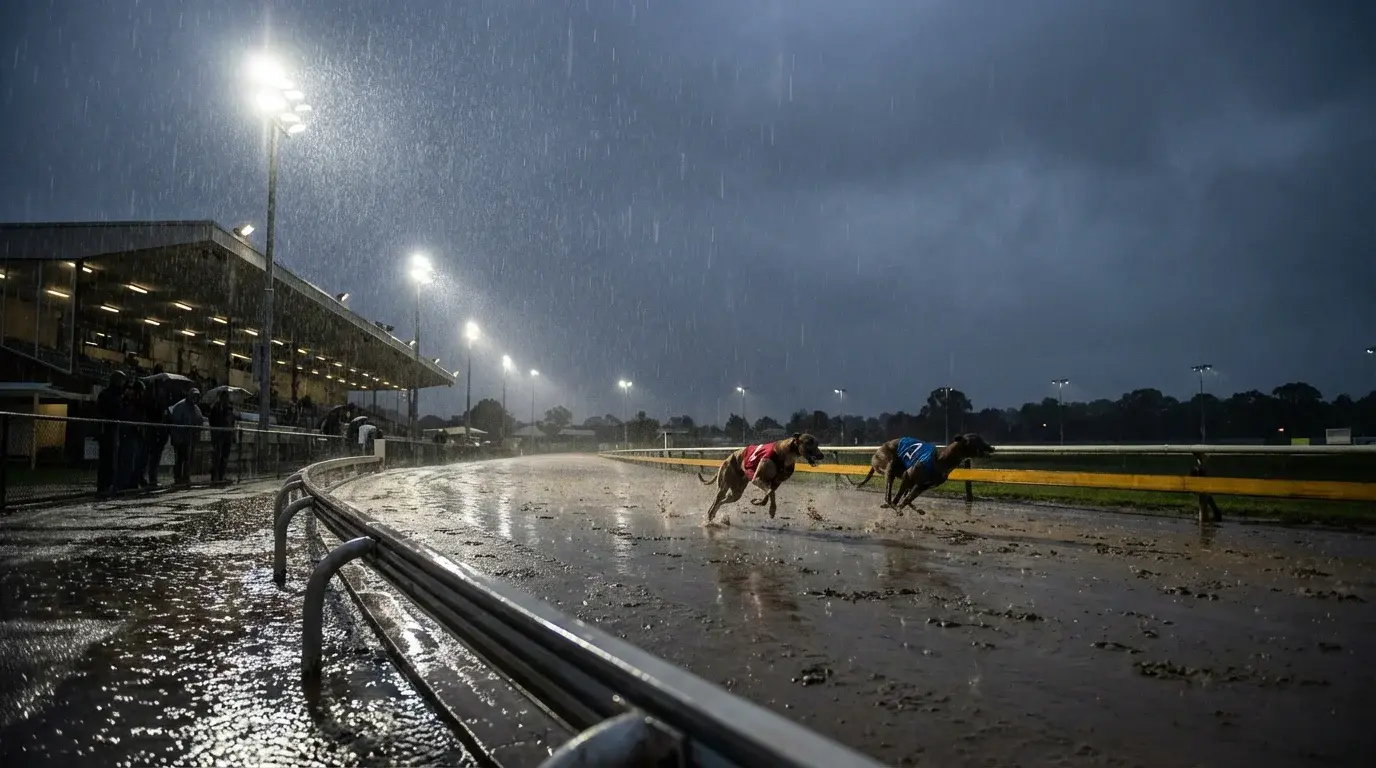
Weather as a Betting Variable
Every greyhound race is run outdoors on a sand surface, and that surface changes with the weather. Rain slows it, frost hardens it, heat dries it, and wind affects the dogs themselves. These are not marginal influences. A heavy downpour in the hour before a meeting can alter race times by a second or more over standard distances, shift trap bias patterns, and change which running styles are advantaged. The punter who ignores the weather is ignoring one of the most tangible and predictable variables in greyhound racing.
Unlike horse racing, where the going is reported as an official classification, greyhound track conditions are less formally communicated. Some venues publish a going description, but many leave punters to infer conditions from the weather forecast, recent results and live observation. This informational gap is an opportunity. The punter who checks the weather before a meeting and adjusts their analysis accordingly has an advantage over those who treat every card as if it were run on the same surface.
This guide covers how different weather conditions affect greyhound racing, the specific impact on trap bias, and how to adjust your betting approach when the elements intervene.
Weather and Track Surfaces
Greyhound tracks in the UK use sand as their racing surface. Sand responds to moisture in a direct and measurable way. Dry sand is loose and fast, allowing dogs to grip and push off efficiently. Wet sand is heavier and more compact, creating a surface that saps energy and slows times. The transition between these states is not gradual: a moderate amount of rain produces a noticeably different running surface, and the effect on race times is visible within a single meeting if conditions change mid-card.
Temperature plays a role too. Cold weather hardens the surface, which can produce faster times in dry conditions but makes the track less forgiving when wet. Frost can make the surface dangerously slippery, and meetings are regularly abandoned or postponed when frost is severe. Hot, dry summer conditions produce the fastest going, but prolonged heat can also make the sand dusty and loose, which affects grip on the bends.
Wind is the least discussed but not insignificant weather factor. A strong headwind on the home straight slows every dog, but it affects lighter-framed runners more than powerful, stocky dogs. Crosswinds on the bends can push dogs off their racing line, particularly wide runners who have less shelter from the field. These effects are subtle and difficult to quantify, but experienced track-goers notice them and factor them into their assessments.
Drainage quality varies between tracks. Some venues have invested in modern drainage systems that clear surface water quickly, minimising the impact of rain on the going. Others, particularly older or less well-funded tracks, can hold water for longer, and the effect of rain persists across multiple races. Knowing how quickly your regular track recovers from rain is a practical detail that informs whether conditions early in a meeting are likely to improve as the card progresses.
Wet Track Conditions
Rain is the weather event that most dramatically affects greyhound racing. A wet track produces slower overall times, but the impact is not distributed evenly. Some dogs handle wet conditions better than others, and the reasons are partly physical and partly stylistic.
Physically, a heavier dog tends to cope better on wet sand than a lighter one. The extra weight provides more downward force for grip, and the thicker pad on a larger paw handles the wet surface more efficiently. Lighter, speedier dogs that rely on quick acceleration from the traps may find their explosive start neutralised on a wet track where the surface gives less traction.
Stylistically, railers gain an additional advantage in wet conditions. The rail provides a well-worn line that is typically the most compacted part of the track, offering better footing than the looser sand further out. A wide runner covering extra ground through the bends is not just running further on a wet evening: it is running on a surface that is softer and more energy-sapping than the rail. Dogs with efficient, rail-hugging styles are physically rewarded by the conditions in a way that extends beyond their usual positional benefit.
Sectional times shift in the wet. First-bend splits tend to slow more uniformly across the field, but the second half of the race sees a greater dispersion as tiring dogs on the less favourable outside lines fade more quickly. A closer that typically picks up places in the home straight may find its advantage reduced on a wet track if the front runners are hugging the rail and conserving energy on the better ground.
How Weather Shifts Trap Bias
The most actionable weather effect for the bettor is the shift in trap bias that wet conditions produce. At most UK tracks, the inside bias that exists in normal conditions becomes more pronounced when it rains. Trap 1 and Trap 2 win rates increase, and the outside traps become correspondingly less productive.
This shift occurs because the rail provides the most efficient racing line on a surface that punishes inefficiency. In dry conditions, a wide runner can compensate for the extra ground by carrying speed through the bends. In the wet, that compensation is harder to achieve because the surface absorbs more energy per stride. The geometric advantage of the inside line, which exists regardless of conditions, becomes amplified when the surface tax on extra ground increases.
The reverse can occasionally occur. If rain is localised or if the track drains unevenly, the inside rail might hold water while the middle of the track drains faster. In these circumstances, dogs on the inside may encounter the worst of the going while those running wider find better footing. These situations are unusual but not unknown, and they produce surprising results that confound punters who assume wet always means rail bias.
Freeze-thaw cycles create their own patterns. A track that froze overnight and then thaws as the temperature rises during the day produces a surface that changes across the meeting. Early races may be run on a hard, fast surface, while later races are run on a softer, damper track as the thaw progresses. Analysing results from the first few races and adjusting your approach for the later card is a practical response to this kind of evolving condition.
Adjusting Your Betting Approach
The first step is information gathering. Check the weather forecast for the track location before the meeting. Not the national forecast, but the local conditions at the specific venue. A meeting at Romford in east London may experience completely different weather from a meeting at Monmore in the West Midlands on the same evening. Local weather data is available from standard forecasting services and takes seconds to check.
If rain is expected, increase the weight you give to inside trap draws in your analysis. A dog with moderate form but a favourable inside draw on a wet night becomes a stronger proposition than the same dog on a dry evening. Conversely, a fancied dog drawn in Trap 5 or 6 faces a tougher task in the wet, and the price may not reflect that additional difficulty.
Look for dogs with proven wet-track form. Some dogs have a demonstrable record of performing better in the rain, whether because of their physical build, their running style or their temperament. Form databases that allow you to filter results by going conditions make this analysis straightforward. A dog that has won twice from five runs on a wet track against a record of zero wins from ten on dry going is telling you something the headline form figures cannot.
Adjust your expectations for times and margins. Wet tracks produce slower times, which is obvious, but they also tend to produce wider winning margins. The front-running railer on the best ground pulls away from rivals struggling on the outside, and the result is a less competitive race than the grading might suggest. This affects each way calculations because the place terms assume competitive finishes, and if the winning margin is large, the second-place dog may still be well beaten.
Finally, be prepared to walk away from meetings where conditions are extreme. A track that is waterlogged, frozen, or transitioning rapidly between states produces unpredictable racing that even the best analysis struggles to model. The races will still be run, but the conditions introduce so much noise that the signal from form, draw and sectional analysis is drowned out. Discretion is a betting virtue, and some weather nights are best watched rather than wagered on.
The Elements in the Equation
Weather is not an exotic factor that occasionally disrupts the form book. It is a constant presence that modifies every race run on every outdoor track in the country. The punter who checks the forecast, understands how moisture and temperature affect the sand surface, and adjusts their trap bias and form assessments accordingly is not doing anything complicated. They are simply accounting for a variable that the majority of bettors ignore. In a game of margins, that consistent adjustment adds up to a steady, quiet advantage.
Get more race analysis at greyhoundoddschecker.
Also read our greyhound early speed.
