 Available in US
Greyhound Betting Strategy Strategy Beats Instinct Most greyhound punters bet on instinct. They glance at the form, pick a dog they like, and place the bet. Som
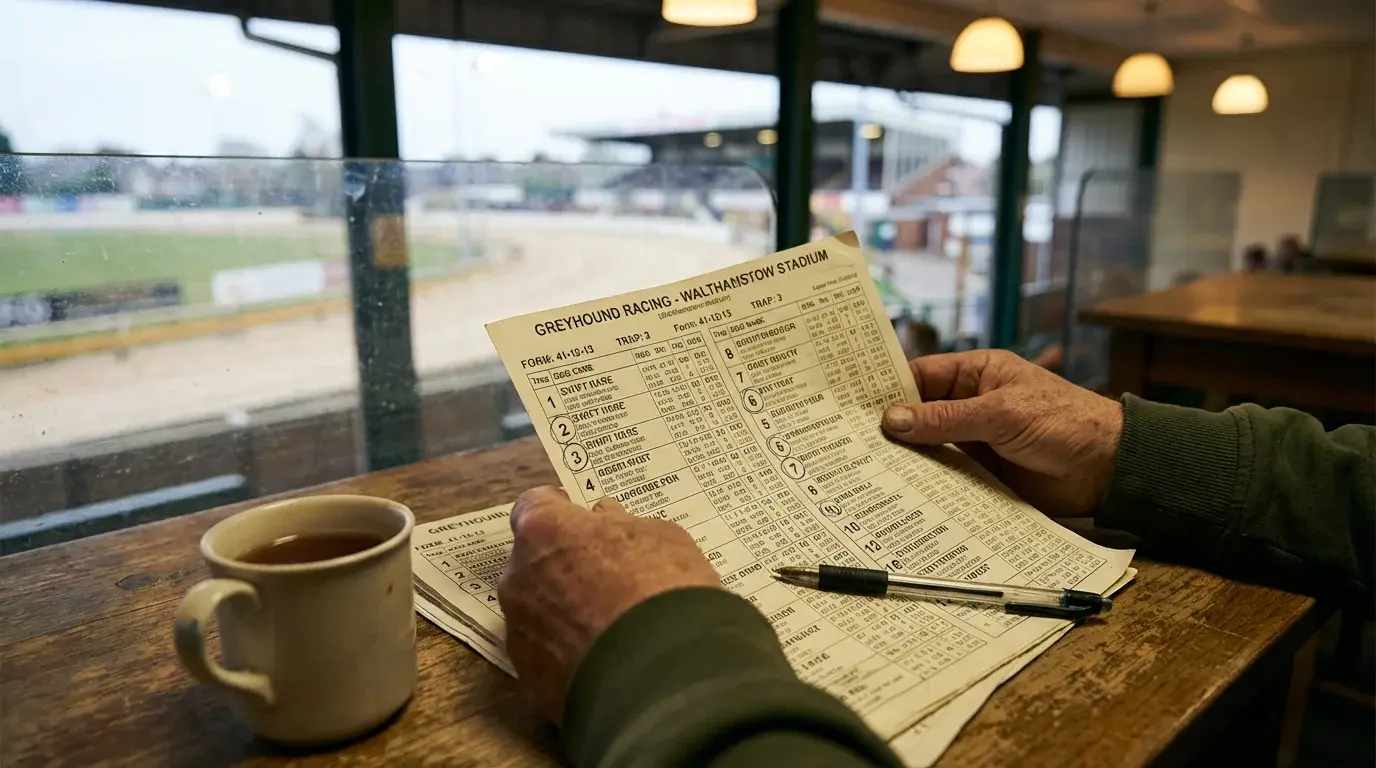
Strategy Beats Instinct
Most greyhound punters bet on instinct. They glance at the form, pick a dog they like, and place the bet. Sometimes they win. Often they don’t. Over hundreds of bets, the bookmaker’s margin grinds them down. Strategy exists to reverse that dynamic—not by predicting every winner, but by ensuring that when you do win, the prices compensate for the losses, and when you lose, the damage stays controlled.
Greyhound betting strategy differs from football or horse racing strategy in important ways. Races last thirty seconds. Fields are restricted to six runners. Form cycles are compressed because dogs race far more frequently than horses—sometimes twice a week. These characteristics create a particular environment where certain approaches thrive and others fail. Strategies that rely on deep statistical modelling of dozens of variables, for instance, face diminishing returns when the core dataset is smaller and noisier than what horse racing provides.
What works in greyhound betting is relatively straightforward to describe and extremely difficult to execute consistently. Find situations where the odds overestimate the probability of a dog losing. Bet only when you have a genuine edge, not when you want action. Manage your bankroll so that inevitable losing runs don’t wipe you out before the wins arrive. These three principles underpin every profitable greyhound betting approach, regardless of the specific system you use.
The sections ahead break down each principle into practical methods. None of them require proprietary software, insider information, or a PhD in statistics. They require patience, discipline, and a willingness to treat betting as a craft rather than entertainment.
The Value Betting Approach
Value is the single most important concept in profitable betting, and it has nothing to do with picking winners. A dog can win and still represent poor value. Another can lose and still have been a correct bet. Value exists when the odds offered are higher than the true probability of the outcome occurring. Over a large sample, backing value consistently produces profit even if the strike rate looks unimpressive.
Assessing value in greyhound markets requires forming your own probability estimate before looking at the odds. Study the race card. Consider the trap draw, the dog’s recent form, the grade, the trainer’s record, and the likely pace of the race. Then assign a rough percentage chance to each runner. If your assessment gives a dog a 25% chance and the bookmaker offers 5/1—implying roughly 17%—that gap represents value. If your assessment says 25% and the price is 3/1, implying 25%, there’s no edge.
This sounds clinical, and it is. The emotional part of betting—the excitement of watching your dog lead off the bend, the frustration of a baulk at the first turn—stays the same whether you bet with strategy or without it. The difference is that a value bettor makes peace with losing individual bets because the process, applied consistently, produces positive returns over time. The instinctive punter chases losses and inflates stakes after wins, both of which erode the bankroll.
One practical approach: track your results across at least two hundred bets before evaluating whether your value assessments are calibrated correctly. Smaller samples produce unreliable conclusions. Greyhound racing’s inherent randomness—six dogs on a tight oval with frequent crowding and pace disruption—means that even well-judged value bets lose more often than casual punters expect. Two hundred bets smooths the variance enough to see whether your method is working or needs adjustment.
Systematic Betting Methods
A system imposes rules on your betting that remove emotional decision-making from the equation. Systems don’t guarantee profit—no honest method does—but they guarantee consistency, and consistency is what allows you to evaluate whether your underlying approach has merit.
The simplest greyhound system involves specialisation. Rather than betting across every meeting at every track, pick one or two tracks and learn them thoroughly. Study the results archive. Learn which traps perform best at each distance. Note which trainers dominate specific grades. Understand how the track’s surface responds to weather changes. Depth of knowledge at a single venue beats shallow knowledge across many, because the market’s pricing tends to be least efficient in areas where generalist punters lack specific information.
A more structured method involves grading-based systems. Dogs dropping in grade after competitive performances at a higher level are often underpriced by the market, which tends to weight recent finishing positions more heavily than the quality of opposition faced. A dog finishing fourth in an A2 race might be significantly superior to one winning at A5, yet the A5 winner prices shorter in an A4 contest because its recent form “looks better” on paper.
Pace analysis offers another systematic angle. Identifying early-pace dogs drawn in inside traps at tracks where the first bend comes quickly creates a repeatable filter. Dogs that lead into the first bend win at a significantly higher rate than those that don’t, across virtually all UK tracks. Combining this tendency with favourable trap draws produces a selection method that, while not infallible, narrows the field in a statistically justifiable way.
Whatever system you adopt, write its rules down before you start betting with it. If the rules exist only in your head, you’ll bend them when a race “feels different” or when a losing run tests your conviction. Written rules hold you accountable. They also make it possible to review and refine the system after a meaningful sample of results, because you can verify whether you actually followed the criteria or deviated.
Trap Bias Systems
Trap bias is one of the few greyhound betting edges that can be quantified with publicly available data. Every UK track displays measurable tendencies for certain traps to outperform others at specific distances. These biases exist because of track geometry—the position of the first bend relative to the traps, the camber of the turns, the rail’s proximity to the inside lane—and they persist because they’re structural rather than random.
A trap bias system works by filtering selections through track-specific data. If trap one at Romford over 400 metres wins at 22% compared to an expected rate of 16.7% for a six-runner race, backing trap one runners at that distance offers a statistical tailwind. The system doesn’t claim trap one will win every time. It claims that over a large sample, trap one wins often enough that, at the right odds, the approach generates positive returns.
The critical caveat is odds dependency. Trap bias offers an edge only when the market underestimates the bias. If bookmakers fully price in trap one’s advantage, the odds will be short enough that no profit remains. In practice, bookmakers account for trap bias but rarely price it perfectly, particularly at less prominent meetings where their models receive less attention. The gaps are small—this isn’t a goldmine—but they’re consistent enough to exploit across a high volume of bets.
Combining trap bias with other factors amplifies the edge. A dog with proven inside running style drawn in a trap that historically outperforms, racing at a track it knows well, against opposition stepping up in grade—that convergence of favourable factors creates a stronger case than any single element alone. Systems built on multiple aligned advantages produce smaller but more reliable selections.
Bankroll Management
The best strategy in the world means nothing if a losing run empties your account before the wins arrive. Bankroll management is the unsexy foundation of profitable betting, and it’s the area where most punters fail—not because they don’t understand it, but because they abandon it when emotions run high.
The starting point is defining a bankroll: a fixed sum of money set aside exclusively for betting, separate from household finances, savings, and daily spending. This isn’t a budgeting exercise in the traditional sense. It’s a recognition that betting involves variance, and variance requires a cushion. A bankroll of £500 doesn’t mean you can afford to lose £500. It means you have £500 to deploy across enough bets for your strategy to demonstrate whether it works.
Stake sizing follows from bankroll definition. A standard approach is level staking at 1-2% of the bankroll per bet. On a £500 bankroll, that’s £5-£10 per selection. This feels small, and it should. Small stakes relative to the bankroll protect you during the losing runs that every strategy encounters. Even an edge of 5-10% at the prices you take will produce sequences of ten, fifteen, or twenty consecutive losers. At 2% stakes, twenty losers costs 40% of your bankroll. At 10% stakes, twenty losers wipes you out entirely.
Resist the temptation to increase stakes after a winning run or to chase losses by doubling up. Both behaviours feel instinctively right and are mathematically destructive. The variance that produced your winning streak will eventually reverse; inflated stakes at that point amplify the damage. Chasing losses compounds bad luck with bad decision-making, which is a reliable recipe for accelerating the path to zero.
Discipline and Record Keeping
Discipline is the mechanism that connects strategy to results. Without it, even sound methods degrade into inconsistent application. The most common failure mode isn’t a bad system—it’s a punter who follows the system when winning and abandons it when losing.
Record keeping enforces discipline by making every bet visible and accountable. At minimum, log the date, track, race, selection, trap, odds taken, stake, and result. Over time, add columns for your pre-bet probability estimate, the closing SP, and any notes about why you selected that particular dog. This data turns into your most valuable analytical asset after a few months of consistent recording.
Review your records monthly. Calculate your return on investment across all bets. Break it down by track, by bet type, by odds range, by day of the week. Patterns will emerge. You might discover that your selections at one track consistently outperform while another track drags your overall numbers down. You might find that your strike rate on outsiders above 6/1 is excellent but your short-priced selections underperform. These insights allow you to refine your approach based on evidence rather than guesswork.
The psychological dimension matters as much as the analytical one. Greyhound racing runs almost every day. The temptation to bet every day—because the opportunity is always there—is the single biggest threat to disciplined execution. Not every card offers value. Some days, the right decision is to close the laptop and bet nothing. The punter who can walk away from a poor card protects profits accumulated on better days. That restraint, more than any clever system, distinguishes long-term winners from long-term losers.
The Long Game
Greyhound betting strategy isn’t a shortcut to easy money. It’s a framework for making decisions that, over a long enough timeline, tilt the mathematics slightly in your favour. That tilt is enough. A 5% edge at the prices you take, applied consistently across a thousand bets, produces meaningful profit. Applied inconsistently, the same edge evaporates into the bookmaker’s margin.
The punters who profit from greyhound racing year after year share a common trait: they treat it as a discipline, not a hobby. They study form when they’d rather watch television. They skip races that don’t meet their criteria when the temptation to bet is strongest. They record every selection and review the data honestly, including the uncomfortable truths about what isn’t working. None of this is glamorous. All of it is effective.
Strategy doesn’t remove the enjoyment. If anything, it deepens it. Winning a bet you’ve analysed thoroughly feels different from winning one you picked at random. The satisfaction comes not just from the return but from the validation that your process works. That feedback loop—study, select, bet, review, refine—is the engine of sustained profitability, and it runs on nothing more exotic than effort and self-control.
Find more strategy guides at greyhoundoddschecker.
Also read our greyhound betting offers.
