Best Greyhound Betting Sites – Bet on Greyhounds in 2026
Loading...
The Pool Betting Alternative
Most greyhound betting is fixed-odds: you take a price, the bookmaker accepts the bet, and if your dog wins, the payout is determined by the odds you locked in. Tote betting works differently. Your stake goes into a pool with everyone else’s money, the operator takes a percentage cut, and the remainder is divided among the winners. The payout isn’t known until after the race, because it depends on how much money entered the pool and how many people picked the winner.
This distinction sounds technical, but its practical consequences are significant. Fixed-odds betting rewards punters who spot value in a bookmaker’s pricing. Tote betting rewards punters who spot winners that the broader public has overlooked. When you back a dog at 5/1 with a bookmaker, that price is set regardless of how many other people back the same dog. When you back a dog through the tote, its dividend shrinks as more money flows onto it and grows as money flows elsewhere. The dynamics are fundamentally different, and understanding those dynamics opens up a parallel betting market that most greyhound punters ignore.
Tote betting on greyhounds is available both at the track and online through selected bookmakers. It covers standard win and place bets as well as more exotic pool products—jackpots, placepots, and combination bets—that offer the possibility of large payouts from small stakes. For punters who enjoy the analytical challenge of predicting multiple outcomes across several races, tote products provide a distinctive and occasionally very rewarding form of engagement with the sport.
How Pool Betting Works
The mechanics of pool betting are elegant in their simplicity. All stakes on a particular bet type for a particular race flow into a single pool. The pool operator deducts a percentage—the takeout—which funds operating costs, track fees, and profit. The remaining money is divided equally among all winning units. If the pool holds £10,000 after takeout and fifty £1 units backed the winner, each unit returns £200.
The takeout percentage varies by bet type and operator but typically ranges from 15% to 30% on greyhound pools. Win pools generally carry lower takeout than exotic pools like jackpots and tricasts. This percentage is disclosed in the terms and conditions of the pool product, though few casual punters check it. The takeout is the pool equivalent of a bookmaker’s overround: it represents the mathematical edge that the operator holds before a single dog leaves the traps.
Because dividends are calculated after the race, the price you receive depends entirely on how the rest of the pool has bet. If the public overwhelmingly backs the favourite, the win pool dividend for that dog will be small—potentially worse than the fixed-odds price. If the public overlooks a genuine contender, the tote dividend for that winner can substantially exceed the starting price. This asymmetry is where tote value lives: in races where public opinion diverges from reality.
Pool sizes on greyhound racing tend to be smaller than on horse racing, particularly at afternoon meetings. Smaller pools produce more volatile dividends, since a single large bet can dramatically alter the payout structure. A £500 stake into a pool of £3,000 shifts the mathematics visibly. At major evening meetings and prestige events, pools are deeper and dividends more stable, making them more predictable for analytical punters.
Tote Bet Types for Greyhound Racing
The tote win bet is the simplest pool product: pick the winner of a race. Your stake enters the win pool, and if your dog crosses the line first, you receive a share of the pool proportional to your stake. The minimum stake is typically £1 or £2 depending on the venue and operator.
Tote place bets pay out if your selection finishes in the first two in a six-runner race. The place pool is separate from the win pool, with its own takeout and its own dividend calculation. Place dividends are generally smaller than win dividends because more outcomes produce a payout, but the strike rate is higher. For punters who believe a dog will run well without necessarily winning, the place pool offers a direct way to express that view.
The tote exacta requires picking the first and second dogs in the correct order. This mirrors the fixed-odds straight forecast but within a pool structure. Exacta pools tend to generate larger dividends than win pools because the difficulty of predicting the correct finishing order for two dogs reduces the number of winning tickets. When an outsider fills one of the top two positions, exacta dividends can reach multiples of the win price.
The tote trifecta extends the challenge to the first three finishers in order. Equivalent to a tricast in fixed-odds terminology, the trifecta pool typically carries a higher takeout but produces dramatically larger dividends. Getting the top three correct in a six-dog race is genuinely difficult, and when the result includes an outsider at any of the three positions, the payout can be substantial from a modest stake.
Jackpot and Placepot Bets
Multi-race tote products bring the biggest potential payouts and the steepest challenge. The jackpot requires selecting the winner of every race in a nominated sequence—typically six races. Getting all six correct from a full card of six-runner races is extremely difficult, which is why jackpot pools can accumulate to significant sums when they roll over from meetings where nobody holds the winning ticket.
Rollover jackpots create the most compelling tote opportunities. When a pool grows through consecutive unsolved sequences, the eventual dividend for a correct ticket can reach thousands of pounds from a £1 stake. The catch is obvious: the difficulty doesn’t decrease as the pool grows. You’re still trying to pick six consecutive winners, and the odds of doing so remain stacked against you regardless of how attractive the pool size becomes.
The placepot offers a more achievable multi-race challenge: pick a placed dog in each leg of the nominated sequence. Since place terms are typically top two in greyhound racing, you have a broader target for each selection. The placepot dividend is correspondingly lower than the jackpot, but the hit rate is meaningfully higher. Many regular tote punters treat the placepot as their primary multi-race product, reserving jackpot bets for occasions when rollover pools create exceptional value.
Combination entries increase coverage at the cost of stake multiplication. A placepot with two selections per leg across six races requires 2×2×2×2×2×2 = 64 combinations, each at your unit stake. At £1 per line, that’s a £64 outlay. The mathematics of combination entries deserve careful attention: the number of lines escalates quickly, and the total cost can easily exceed the likely dividend in thin pools.
Tote Odds vs Fixed Odds
The central question for any punter considering tote betting: when does the pool dividend beat the fixed-odds price, and when does it fall short? The answer depends on public betting patterns and is only knowable in retrospect, which makes systematic tote value harder to exploit than fixed-odds value.
Favourites almost always pay less through the tote than at fixed odds. The public concentrates its money on obvious contenders, which depresses the tote dividend for those selections below the bookmaker’s price. If you’re backing the market leader, fixed odds are nearly always the better choice. The bookmaker’s overround is typically less punitive on favourites than the tote’s dividend reduction caused by public money piling onto the same selection.
Outsiders frequently pay more through the tote. When a longer-priced dog wins, the tote dividend can exceed the starting price—sometimes significantly—because fewer punters backed it in the pool. This is where tote betting generates its most attractive returns. If your approach to greyhound betting naturally gravitates toward longer-priced selections where you’ve identified form or draw advantages that the public has missed, the tote pool may systematically reward you better than fixed odds.
The practical strategy is straightforward: compare the likely tote dividend to the available fixed price. If the indicative tote return exceeds the best bookmaker price, bet through the pool. If the fixed-odds price is superior, take the bookmaker’s offer. Some operators display indicative tote dividends as the pool builds, giving you a rough sense of likely returns before committing. These indicative figures shift as more money enters the pool, but they provide useful guidance, particularly close to race time when the pool is approaching its final shape.
On-Track Tote Betting
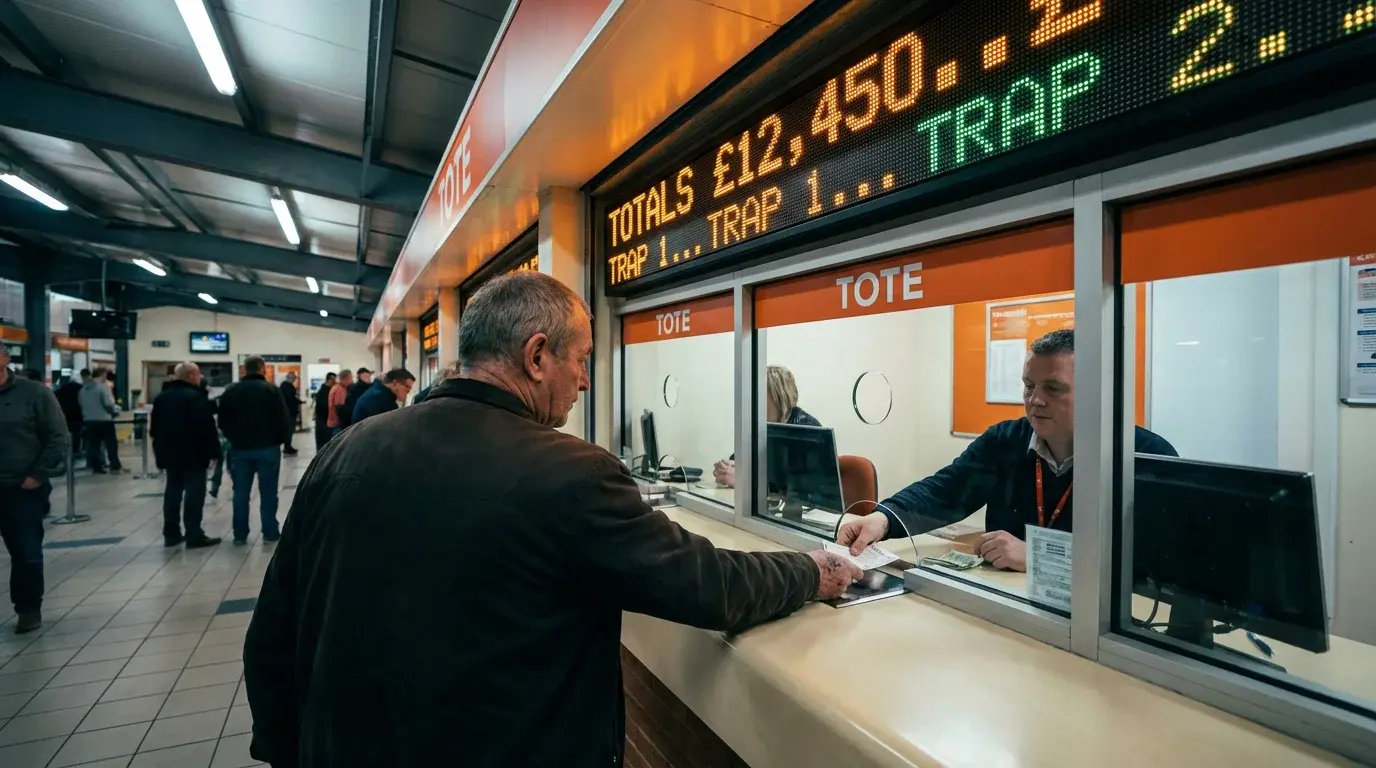
Attending a greyhound meeting in person puts you closest to the tote experience as it was originally designed. Trackside tote windows accept bets directly into the on-course pool, and the atmosphere of choosing your selection, watching the pool indicators, and seeing the dividend declared after the race has a tangible appeal that online betting can’t fully replicate.
On-course pools are typically smaller than their online equivalents, particularly at less well-attended meetings. This means dividends can be more volatile—a single sizeable bet moves the numbers more noticeably—but it also means that overlooked selections can produce outsized returns when they win. The intimate scale of trackside tote betting rewards the punter who reads the race independently of the crowd rather than following consensus.
Many tracks display real-time pool totals on electronic boards, showing how much money has been staked on each dog in the win and place pools. This information is genuinely useful: it tells you where the trackside money is going, which in turn tells you what dividend to expect if a particular dog wins. Experienced tote punters check these boards before committing their stake, waiting to see the final pool shape before betting in the closing moments.
A Different Way to Play
Tote betting won’t replace fixed-odds wagering for most greyhound punters, nor should it try. The two formats serve different purposes and reward different skills. Fixed odds reward price assessment and value identification against a bookmaker’s line. Tote betting rewards independent selection and the ability to identify winners that the crowd has underestimated.
For punters already comfortable with fixed-odds greyhound betting, adding tote products to the repertoire broadens the toolkit. The placepot provides a structured multi-race challenge at manageable stakes. The win and place pools offer occasional superior dividends on outsiders. And the experience of trackside tote betting, for those who attend meetings in person, connects you to the oldest form of organised betting on the dogs—money into a pool, hope for the best, and a dividend that tells you exactly how the crowd saw the race differently from you.