
Best Greyhound Betting Sites – Bet on Greyhounds in 2026
Loading...
The UK Greyhound Racing Circuit
Eighteen licensed stadiums across Britain, each with its own character, distances and trap tendencies. The UK greyhound racing circuit is compact compared to horse racing, but that compactness is an advantage for punters. Fewer tracks means fewer variables to learn, and the punter who invests time in understanding the specific quirks of each venue has an edge that the casual bettor never acquires.
British greyhound racing operates under the regulation of the Greyhound Board of Great Britain, commonly known as the GBGB. Licensed tracks host both BAGS meetings, which are the bread and butter of weekday daytime racing broadcast to betting shops and online platforms, and evening or weekend fixtures that attract on-course attendance. The distinction between meeting types matters for betting because the quality of fields, the reliability of form and the depth of the odds market all vary depending on the fixture level.
This guide maps out the UK circuit, profiles the major tracks, and highlights which venues offer the most productive betting opportunities.
GBGB Licensed Tracks
The GBGB licenses and regulates all professional greyhound racing in the UK. As of 2026, the licensed track roster includes 18 stadiums in England and Wales, with the majority concentrated in the greater London area, the Midlands and the North. Scotland’s greyhound racing scene has contracted significantly over recent decades, with no GBGB-licensed tracks currently operating north of the border.
Licensed tracks are required to meet welfare standards, maintain track surfaces, employ qualified racing managers and adhere to GBGB rules on grading, race conditions and drug testing. This regulatory framework provides a level of consistency and integrity that independent or unlicensed meetings cannot match. For the bettor, licensing means that form figures, race times and grading information are reliable and comparable across tracks.
The number of licensed tracks has declined from its mid-twentieth-century peak, when over seventy stadiums operated across the UK. Closures have been driven by rising land values, particularly in London and the South East, where greyhound stadiums occupied prime real estate that developers coveted. Wimbledon, Walthamstow, Catford, Hall Green and Henlow are among the prominent names that have closed in recent decades. The remaining stadiums are generally those with modern facilities, strong local support or favourable lease arrangements that protect them from development pressure.
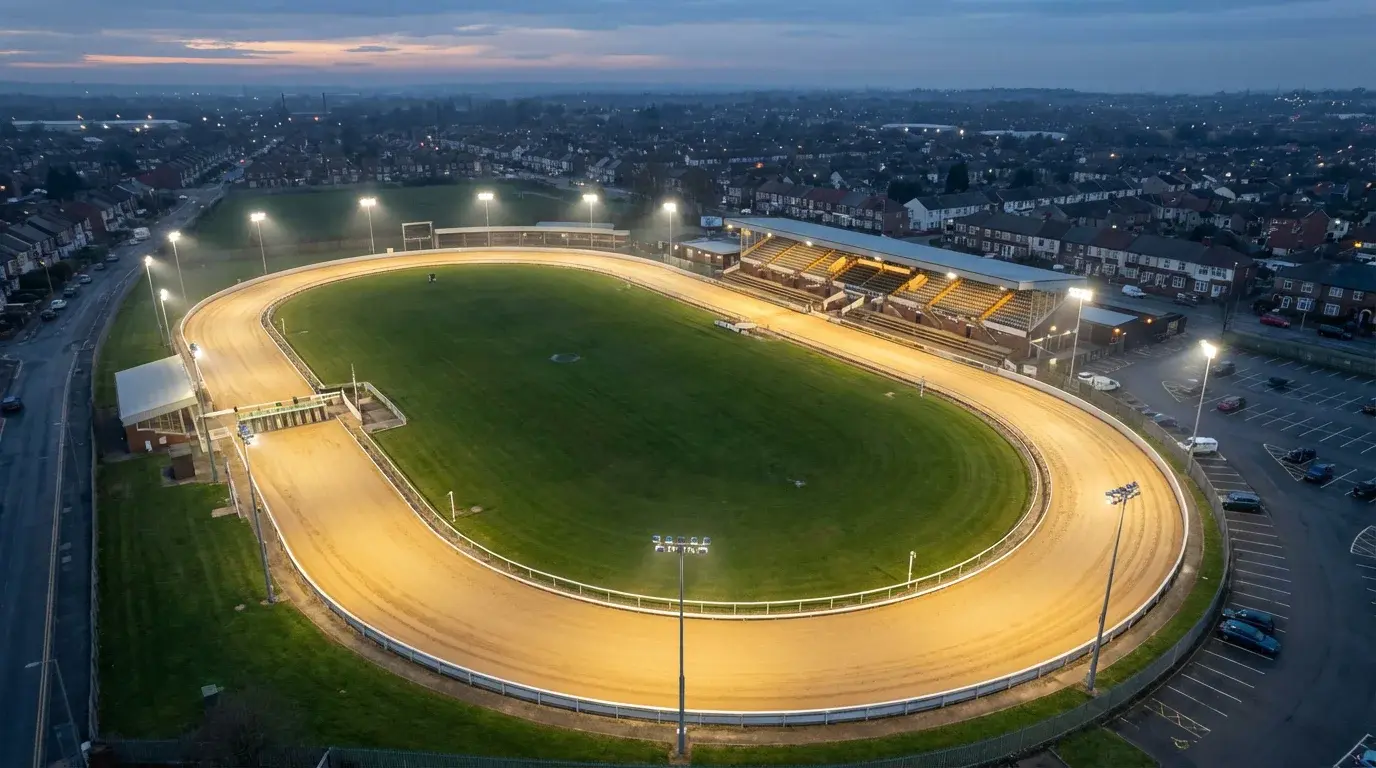
Each licensed track has a distinct identity shaped by its layout, surface, distance configuration and local competition. Two tracks in the same region might offer completely different racing experiences depending on their circuit size, bend profiles and sand depth. Understanding these differences is the foundation of track-specific betting.
Common Distances by Track
Greyhound racing in the UK is run over a range of distances, typically from around 230 metres at the shortest sprint tracks to over 900 metres for marathon events. The standard middle-distance race is in the 460 to 500 metre range, which covers two full circuits at most tracks. This is the distance at which the majority of graded racing takes place and where the deepest form database exists.
Sprint races, usually between 230 and 300 metres, are single-bend or half-lap dashes where early pace and trap draw are overwhelmingly important. At sprint distances, a dog that breaks a length behind at the traps has almost no time to recover. The result is frequently decided before the first bend is negotiated, which makes sprint racing particularly predictable when you know the early speed of each runner and the trap bias of the track.
Middle distances of 460 to 500 metres introduce more complexity. Two full bends mean two opportunities for position changes, and dogs with tactical speed rather than pure early pace can work into contention through the second half of the race. Form reading at middle distances requires assessing both early speed and stamina, and the best two-bend dogs are those that combine a clean break with the ability to sustain their run through the final straight.
Stayers’ distances, from 630 metres upward, are a specialist category. Fewer races are run at these trips, and the pool of dogs that stay well is smaller. This creates a narrower form base and can produce less predictable results, but it also means the bookmakers have less data to work with, which occasionally leads to less accurate pricing. Marathon races at 840 metres and above are rare, reserved for specific events at tracks like Towcester where the circuit size accommodates the distance.
Not every track offers every distance. Some are pure sprint tracks that max out around 480 metres. Others cater to the full range from sprints through to middle distance and occasionally stayers. Knowing which distances your target track offers, and which distances attract the strongest competition, is essential information for any systematic approach to greyhound betting.
Regional Track Groupings
London and the South East remains the heartland of UK greyhound racing in terms of meeting frequency and betting turnover. Romford is the flagship track in this region, hosting frequent evening meetings that attract strong fields and deep betting markets. Crayford in Kent and Central Park in Sittingbourne also serve the southern circuit, each with their own track characteristics and regular BAGS fixtures.
The Midlands cluster centres on Monmore Green in Wolverhampton and the newly opened Dunstall Park Greyhound Stadium, also in Wolverhampton, which replaced Perry Barr in Birmingham following its closure in August 2025. Both tracks run multiple cards per week and form the backbone of Midlands greyhound racing. Dunstall Park, built at the Wolverhampton Racecourse site, offers modern facilities, while Monmore operates on a tighter configuration that produces a different style of racing.
The North of England has a smaller but active circuit. Belle Vue in Manchester and Sunderland are established venues that host both BAGS and evening meetings. Yorkshire and the North East have seen track closures over the years, concentrating the northern circuit into fewer but better-supported venues.
The South West and Central England are served by tracks including Towcester in Northamptonshire, the current home of the English Greyhound Derby. Hove in Sussex, technically on the south coast, is another significant venue known for its competitive open racing and feature events.
Major Track Profiles
Romford is a tight, fast track that favours dogs with early pace and clean trapping. The sprint distances at Romford are particularly sharp, and the inside traps carry a historical advantage because the first bend comes up quickly after the start. Romford’s evening meetings are among the best-attended in the UK and generate deep betting markets with competitive odds from multiple bookmakers. For punters, Romford offers the combination of reliable form, frequent racing and strong market liquidity that makes it one of the best tracks to specialise in.
Monmore Green in Wolverhampton runs more meetings than almost any other track in the UK, making it a staple of the BAGS circuit. The track is a standard four-bend oval with good sight lines and a consistent sand surface. Trap bias at Monmore tends to favour inside runners at sprint distances but is less pronounced at middle distances. The sheer volume of racing at Monmore means there is an extensive form database available, which benefits the data-driven punter.
Hove on the Sussex coast hosts some of the strongest open racing outside of the Derby. The track surface and configuration produce competitive races where form holds up well, and the betting markets on feature nights are deep enough to support serious staking. Hove’s reputation for quality racing makes it a popular choice for punters who prefer to focus on fewer, better-quality meetings rather than spreading their attention across every BAGS card.
Towcester became the home of the English Greyhound Derby in 2017 following the closure of Wimbledon, briefly losing it to Nottingham in 2019 before regaining it in 2021. The track has developed a reputation as a venue for big-event racing, with the Star Sports-sponsored Derby offering £175,000 to the winner. The Northamptonshire location means it sits somewhat outside the traditional greyhound heartlands of London and the Midlands, but its association with the sport’s premier event gives it a profile that belies its geography. The track accommodates marathon distances that are not available elsewhere, making it a unique venue in the UK circuit.
Central Park in Sittingbourne, Crayford, Dunstall Park, Belle Vue and Sunderland round out the roster of significant tracks. Each has its own trap bias patterns, distance specialities and meeting schedules. A punter who races regularly will naturally gravitate towards two or three tracks that suit their schedule and analytical approach, and deepening knowledge of those specific venues is the surest path to consistent returns.
Which Tracks Have Best Betting Markets
The depth and competitiveness of the betting market varies significantly by track and meeting type. Evening meetings at Romford, Hove and Monmore consistently attract the widest range of bookmaker prices and the tightest margins. This is because these meetings generate the highest turnover, and bookmakers compete more aggressively on pricing when the volume justifies it.
BAGS meetings at the same tracks still produce reasonable market depth, but the odds are typically less competitive than the evening equivalents. Daytime BAGS cards at smaller tracks may only be priced up by a handful of bookmakers, and the margins can be wider. If you are serious about getting the best price on every bet, concentrating your activity on the meetings with the deepest markets gives you structurally better odds over time.
Odds comparison tools like Oddschecker display the full range of available prices for each meeting, making it straightforward to identify which cards have the most competitive markets on any given day. As a general rule, the meetings listed earliest on the comparison sites with prices from six or more bookmakers are the ones where price competition is strongest. Meetings with only two or three bookmakers priced up offer less scope for finding an edge on price alone.
Knowing the Circuit
The UK greyhound circuit is small enough to learn and large enough to specialise in. Eighteen tracks is a manageable number, and most regular punters will find that three or four tracks provide more than enough racing to sustain an active betting operation. The key is depth rather than breadth: understanding one track’s trap bias, distance characteristics and meeting quality in detail is worth more than a superficial familiarity with all eighteen.
Track knowledge compounds over time. The more races you watch and analyse at a given venue, the better your sense of how races unfold there, which running styles prosper, and where the market consistently misprices certain types of runner. That accumulated intelligence is the punter’s equivalent of home advantage, and it is available to anyone willing to put in the hours. The stadiums are not going anywhere. The opportunity is there every week.